

Septic Tank Maintenance Tips Every Homeowner Should Know
Protecting Your Septic System Starts at Home
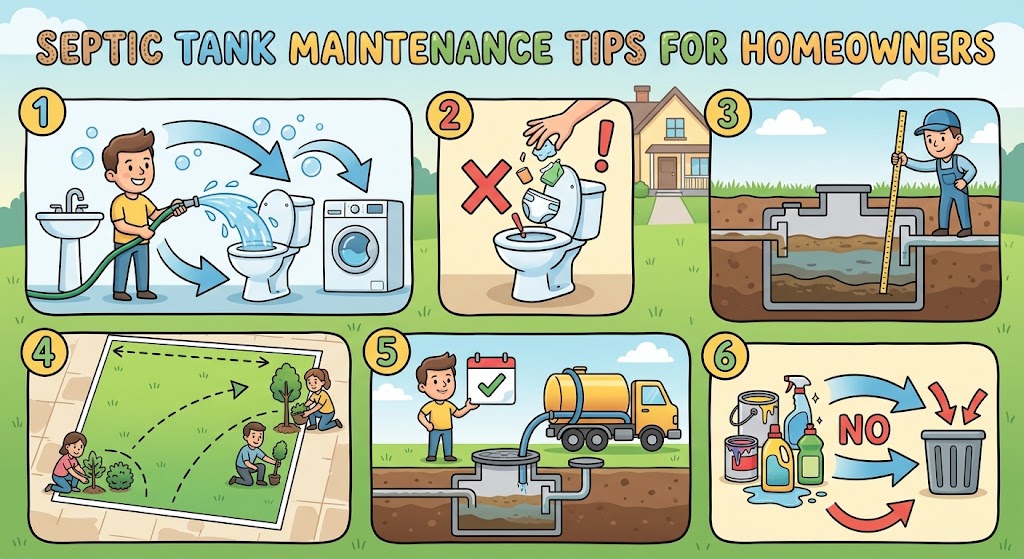
While professional pumping and inspections are essential, the daily habits of everyone in the household play a major role in how long a septic system lasts. Small changes in what goes down the drain can prevent major problems down the line.
Be Mindful of What You Flush
Toilets should only ever be used for human waste and toilet paper. Items like wipes, sanitary products, diapers, cotton swabs, and paper towels do not break down the way toilet paper does, and they can clog pipes or accumulate in the tank far faster than expected.
Limit Harsh Chemicals
Septic tanks rely on natural bacteria to break down waste. Pouring bleach, drain cleaners, or other harsh chemicals down the drain in large amounts can kill this bacteria, slowing decomposition and allowing solids to build up more quickly. Use these products sparingly and consider septic-safe alternatives where possible.
Conserve Water Where You Can
Excess water entering the system too quickly can overwhelm the tank and drain field, especially in older or smaller systems. Spreading out laundry loads throughout the week, fixing leaking fixtures promptly, and installing water-efficient appliances all reduce unnecessary strain.
Keep the Drain Field Clear
Avoid parking vehicles, planting trees, or building structures over the drain field. Tree roots in particular can grow into pipes and cause significant damage, while heavy weight above the field can compact the soil and interfere with proper drainage.
Schedule Regular Inspections
Even with careful habits, a septic system needs periodic professional inspection to catch problems that aren't visible from the surface. Combining good daily practices with scheduled inspections and pumping is the most reliable way to keep your system running smoothly for years.
Want a maintenance plan built around your household's specific needs? Get in touch with our team for a full inspection and personalized recommendations.
More Septic Care Tips
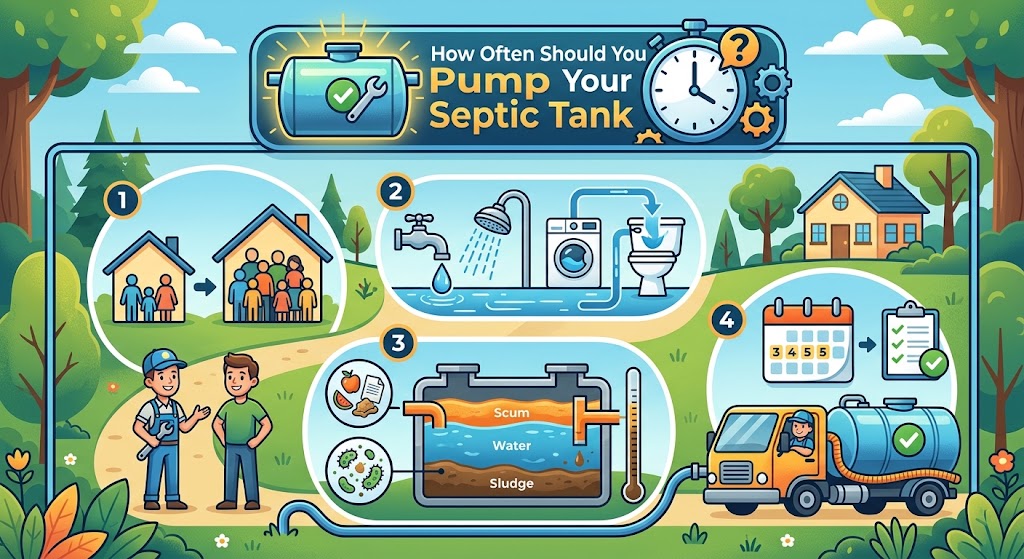
How Often Should You Pump Your Septic Tank
The right septic pumping schedule depends on your household size, tank capacity, and water usage. Here's how to figure out what's right for you.
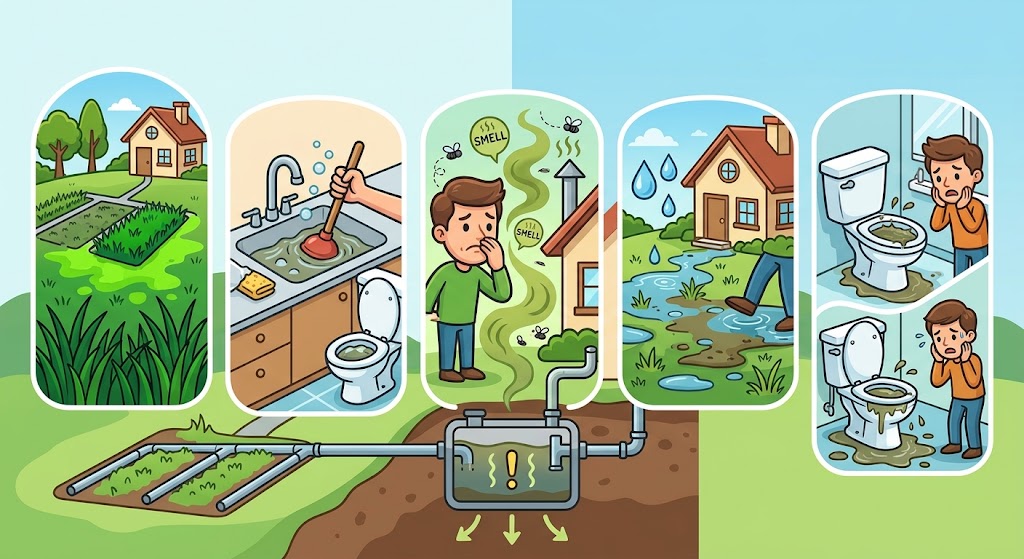
5 Warning Signs Your Septic System Is Failing
Don't wait for a costly backup. Learn the early warning signs of septic system failure and what to do before the problem gets worse.
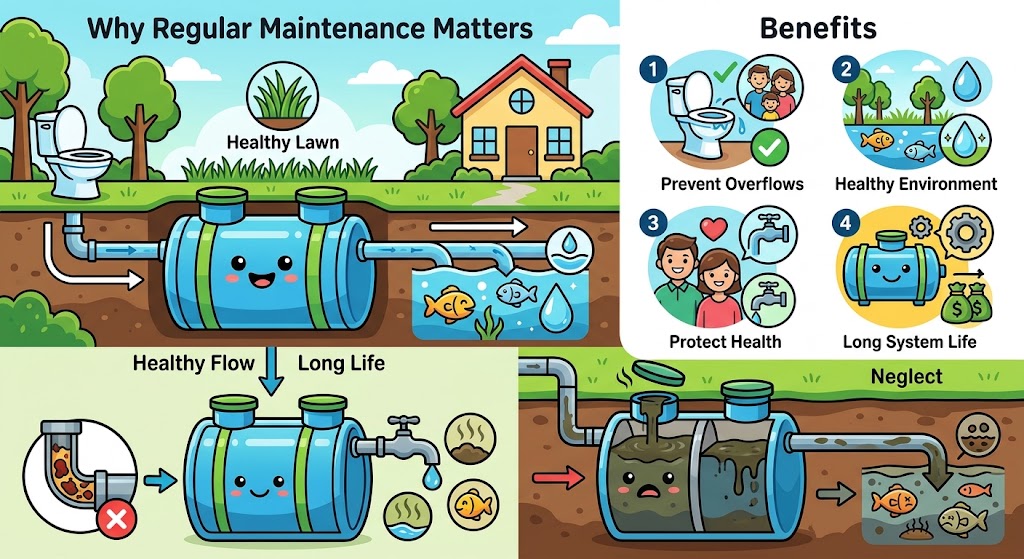
Septic Tank Cleaning: Why Regular Maintenance Matters
Learn why regular septic tank cleaning prevents costly backups and health hazards, how often it should be done, and when to call a professional service.